
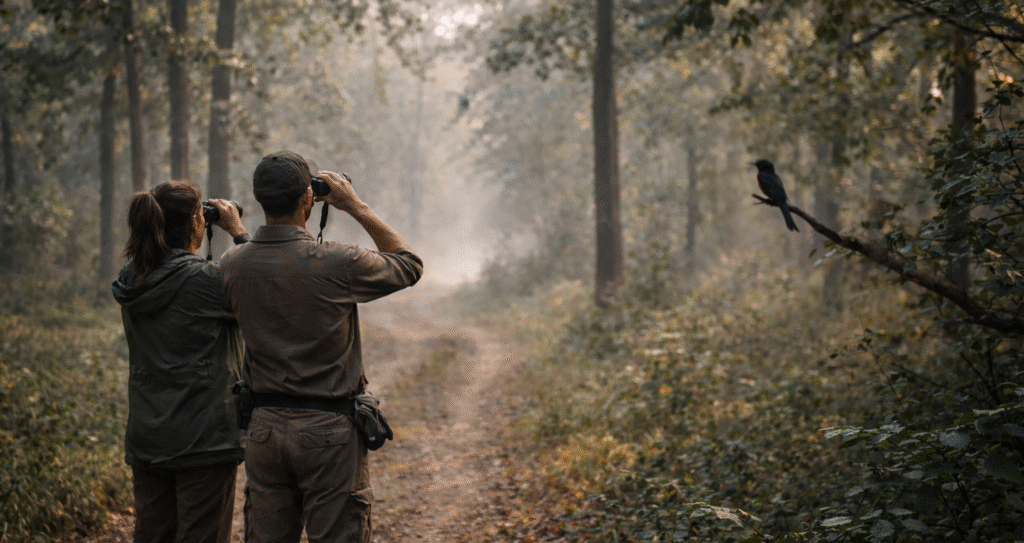
While Jim Corbett National Park draws thousands of visitors each year for its tigers, the region holds an equally compelling secret: it is one of India’s finest birdwatching destinations. With over 600 recorded species, among the highest of any protected area in the subcontinent, the park offers a level of avian diversity that rivals far better-known birding hotspots across Asia.
What makes the experience truly remarkable is the sheer variety packed into a single landscape. On any given morning, you might move through dense sal forest, emerge onto an open grassland, and end up on the banks of the Kosi river encountering entirely different bird communities at each turn. Whether you’re an experienced birder with a life list to build, or simply someone who finds joy in nature, Jim Corbett rewards curiosity at every level.
Why Jim Corbett is Special for Birders
Most wildlife destinations offer one dominant habitat. Jim Corbett offers several, often within a single safari circuit. Sal forests shelter woodland specialists; the vast Dhikala grasslands attract raptors and ground-nesting species; marshes and wetlands draw migratory waterfowl; and the Kosi river corridor supports a rich community of riverine birds year-round.
Unlike the pace of a typical tiger safari, birdwatching encourages you to slow down, stay still, and pay attention to the subtler rhythms of the forest. It is this quality of attention — and what it reveals — that makes the experience so deeply satisfying.
The Best Birdwatching Zones in Jim Corbett
Dhikala Zone — Raptors & Open Grasslands
Dhikala is the park’s most expansive zone and a favourite among serious birdwatchers. Its wide chauris and open grassland clearings offer unobstructed views that make raptor-spotting particularly rewarding. At dawn, the light is extraordinary: long and golden across the grass, often with mist still clinging to the treeline.
Commonly spotted species include:
Crested Serpent Eagle
Changeable Hawk-Eagle
Collared Falconet
Indian Pitta (seasonal)
Bijrani Zone — Forest & River Edge Birding
Bijrani offers a more intimate birdwatching experience than Dhikala, with denser forest cover and several water crossings that attract a different suite of species. Morning safaris here are particularly productive for photography, as the lower light filtering through the canopy creates beautiful conditions and birds tend to be active close to the tracks.
Look out for:
Multiple kingfisher species
Woodpeckers (including Flameback and Lesser Yellownape)
Scarlet Minivet and other minivets
Barbets along the forest edge
Jhirna Zone — The Year-Round Option
Jhirna is the only zone that remains open throughout the year, including during the monsoon when much of the park is closed to visitors. Its open, scrubby grasslands are somewhat different in character from Dhikala, attracting a slightly different mix of species — particularly birds of prey, shrikes, and bee-eaters that prefer more exposed terrain.
Species regularly seen here include:
Black-winged Kite
Various shrikes
Bee-eaters
Spotted and Indian Scops Owlet
The Kosi River Belt — Relaxed Riverside Birding
Not all of Jim Corbett’s best birding happens inside a jeep. The Kosi river corridor — accessible from the resort areas around Ramnagar — offers relaxed, walk-at-your-own-pace birdwatching that many guests find unexpectedly rich. The shallow, braided river attracts waders, wagtails, and ducks, while the surrounding scrub holds a good mix of resident species.
Common riverside sightings include:
River Lapwing
Plover species
Grey and White Wagtail
Migratory ducks (winter)
When to Go: Seasons at a Glance
Winter (October to February) — Peak Season
Winter is widely considered the best time to visit for birdwatching. Migratory species arrive from Central Asia and the Himalayas, species diversity is at its highest, and the cooler, clearer mornings make for highly active birds — and comfortable conditions for observers. If you can only visit once, come between November and January.
Spring (March to April) — Breeding Activity
Spring brings a different kind of spectacle. Resident species shift into breeding plumage, territorial calls fill the forest from before dawn, and nesting behaviour is easy to observe. While overall species numbers may be lower than in winter, the activity and colour on display make this a rewarding time for bird photographers.
Monsoon (July to September) — For the Dedicated Birder
Most safari zones close during the monsoon, but the landscape comes alive in a different way. The forest turns lush and intensely green, resident birds are highly vocal, and species that are difficult to spot in the dry season become more visible. The Jhirna zone stays open, and the surrounding areas offer worthwhile birding for those willing to brave the humidity.
Where to Stay: Choosing the Right Base for Birdwatching
For birdwatching, proximity to habitat matters. The best stays are those situated close to the forest edge or along a river corridor, places where the birding begins before you even board a safari vehicle, and where evenings bring their own surprises as the light fades.
The Hridayesh Resort, set along the quiet banks of the Kosi River, is a natural choice for visiting birders. Its riverside setting means that many guests enjoy good birdwatching directly from the property, a calm counterpoint to the structured intensity of a zone safari. Early morning departures to Bijrani or Dhikala are easily arranged, and naturalist support is available for those who want a guided experience.
After a long morning in the field, returning to comfortable, thoughtfully designed surroundings makes the trip feel complete rather than exhausting.
Practical Tips for a Better Birdwatching Experience
A few simple habits make a significant difference in the field:
Start before sunrise — the first hour of light is the most productive
Carry quality binoculars; 8×42 is a versatile choice for forest birding
Wear neutral, muted colours — avoid white or bright patterns
Move slowly and minimise noise, especially around water
Consider hiring a local naturalist; their knowledge of calls and behaviour is invaluable
A Different Kind of Wildlife Experience
Birdwatching changes the way you move through a landscape. Where a tiger safari is driven by anticipation and adrenaline, birding asks you to slow down, listen carefully, and find reward in the small and the subtle, the flash of a kingfisher across the river, the call of a pitta somewhere deep in the undergrowth, the silhouette of a hawk-eagle against the morning sky.
Jim Corbett, with its exceptional habitat diversity and remarkable species list, offers all of this and more. Whether you come as a dedicated lister or simply as someone who wants to experience nature at its own pace, the park will not disappoint.
Book Your Birdwatching Trip In Jim Corbett Itinerar
📞 Call us: +91-88690-73337 / +91-88698-73337
📧 Email: reservations@thehridayeshresorts.com
🌐 Visit: The Hridayesh Resorts
Our team will help you create a personalized itinerary tailored to your travel goals.