
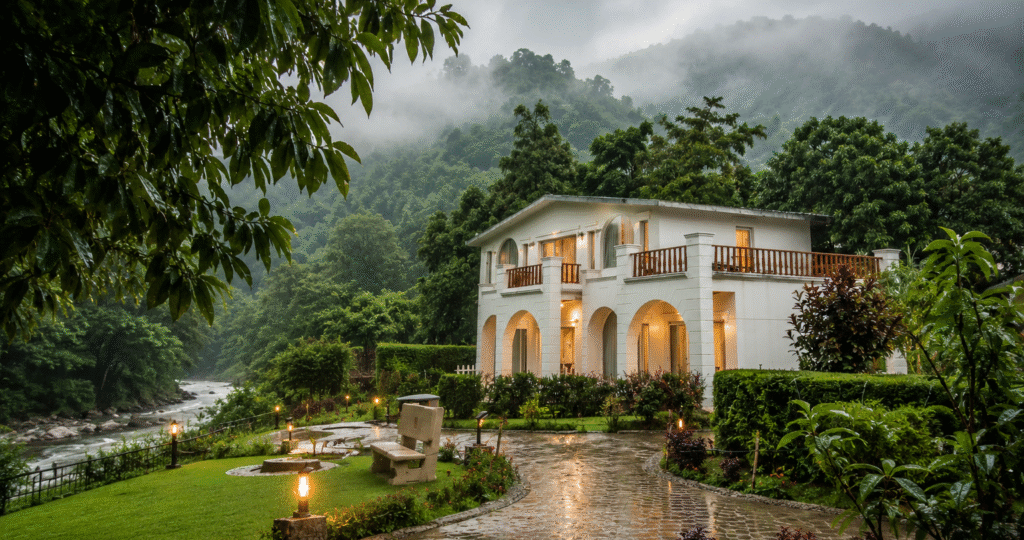
Here’s the objection every monsoon traveler has before they book: half the safari zones shut down, so what’s actually left to do?
Fair question. The core zones do close between July and September, for conservation and road safety. But Jhirna, Dhela, Garjia, and Sitabani stay open through the rains and the trade-off you’re making isn’t “safari vs. nothing.” It’s “guaranteed tiger sighting vs. a quieter forest, a fuller Kosi River, and rates that drop when the crowds do.”
If that trade sounds worse than it is, this guide walks through exactly what you gain and lose by booking Jim Corbett in monsoon so you can decide with the real facts, not the assumption.
Can You Actually Go on Safari in Monsoon?
Yes but selectively, and it’s worth understanding why before you plan around it.
Jim Corbett’s core zones close during monsoon to protect wildlife during breeding season and to keep visitors off flood-prone forest roads. What stays open, running jeep safaris throughout the rains (weather and forest department guidelines permitting):
- Jhirna Zone
- Dhela Zone
- Garjia Zone
- Sitabani Forest Area (outside the core national park)
These zones are reliable for spotting elephants, deer, wild boar, sloth bears, and a wide range of birdlife with occasional leopard and tiger sightings. Always confirm zone status a day or two out; heavy rainfall can temporarily affect operations.
Why Monsoon Wins Anyway
1. The forest looks nothing like the photos you’ve seen. Dry, dusty winter terrain gives way to dense green cover, swollen streams, and mist-covered ridgelines. Riverbeds that sit empty most of the year start flowing again.
2. Winter is Corbett’s most crowded season. Monsoon is the opposite of that. Winter means full resorts, busy roads, and safari queues. Monsoon flips it: easier dining reservations, no queue at the gate, and villa rates that drop along with the footfall.
3. The weather itself does the work. Temperatures generally sit between 22°C and 30°C, cool compared to peak summer, and ideal for the kind of holiday that doesn’t need a packed itinerary: reading by a window as the rain comes down, walking through rain-soaked gardens, or just sitting with a cup of tea and watching the hills disappear into mist.
When Exactly Should You Go?
Month
Weather
Best For
June
Beginning of rains
Pleasant stays, light showers
July
Heavy rainfall
Nature lovers, photography
August
Lush greenery
Romantic getaways
September
Rain reduces
Scenic safaris, birdwatching
September is generally the sweet spot rainfall eases while the landscape stays at its greenest.
Monsoon Is Heaven for Birdwatchers
Jim Corbett is home to over 600 recorded bird species, and the monsoon is when activity peaks. Species commonly spotted during the rains include:
- Crested Kingfisher
- Indian Pitta
- Paradise Flycatcher
- Hornbills
- Eagles
- Woodpeckers
- Minivets
- Barbets
If photography is your thing, monsoon’s overcast light and dramatic backdrops make for some of the best conditions of the year.
Activities Beyond Safari
1. Riverside walks. The Kosi River runs fuller and more dramatically in the monsoon. Early mornings and evenings are best for walks while following local safety guidance on river levels.
2. Nature photography. Misty forests, rain droplets, cloud-covered hills, and vivid post-rain colour give the monsoon a different visual character than any other season here.
3. Local sightseeing. Garjiya Devi Temple, Corbett Museum, Corbett Falls, and Sitabani Forest Area (where accessible) are all worth a visit just to check road conditions after heavy rainfall.
4. Indoor recreation. For the hours it actually rains, look for a stay with real indoor options, wellness treatments, multi-cuisine dining, and family-friendly spaces, not just a lobby to wait it out in.
What to Pack
Waterproof jacket, umbrella, quick-dry clothing, comfortable trekking shoes, a camera rain cover, insect repellent, a power bank, and personal medicines. Skip heavy cotton. It takes too long to dry between showers.
The Honest Trade-Offs (So You Don’t Feel Misled Later)
What you gain
What you give up
Lush, green landscapes and dramatic light
Guaranteed tiger sightings (still possible, less predictable)
Fewer tourists, more peaceful resorts
Some safari zones and road access restricted
Lower rates than winter peak season
Outdoor plans may need to shift around rain
Better photography and birdwatching
River activities occasionally restricted for safety
A genuinely different Corbett than the postcard version
Weather can change quickly pack flexible plans
If guaranteed tiger sightings are the whole point of your trip, winter or early summer will serve you better. If the point is scenic beauty, quieter grounds, and reconnecting with nature at a slower pace, monsoon is arguably the better trip.
Why Stay at The Hridayesh Resorts
The Hridayesh Resorts sits on 8.25 acres of riverside grounds in Dhikuli, close enough to the Kosi River that guests can walk to it. Four villa types cover different kinds of monsoon trips:
- Executive Villa (450 sq. ft.) from ₹14,000/night, a simple, private base for couples or solo travelers
- Premium Luxury Villa (450 sq. ft.) from ₹16,000/night
- Riverside Luxury Villa (1,000 sq. ft.) from ₹18,000/night, the closest room type to the Kosi, which matters more in monsoon than any other season, when the river runs full
- Royal Suite (1,500 sq. ft., two bedrooms, two bathrooms) from ₹28,000/night, built for families or two couples riding out a rainy afternoon together
Every villa includes air conditioning, high-speed internet, and smart-lock access, and the property is pet-friendly.
Rain evenings move indoors easily: dinner at Unwind, the resort’s 86-cover restaurant with an open show kitchen serving European, Pan-Asian, Indian, and Fusion dishes, followed by a nightcap at Elixir, the in-house bar. Between safari windows, there’s a spa, gym, swimming pool, and an indoor gaming lounge genuinely useful on the days it doesn’t stop raining.
Frequently Asked Questions
1. Is Jim Corbett open during the monsoon?
Yes. Several core safari zones close during monsoon, but Jhirna, Dhela, Garjia, and Sitabani generally stay open, subject to weather and forest department guidelines.
2. Is it safe to visit Jim Corbett during the rainy season?
Yes, provided you monitor weather updates, follow local advisories, and avoid restricted or flood-prone areas during heavy rainfall.
3. Can you see tigers in Jim Corbett during the monsoon?
Sightings are possible but less predictable than in the dry months. Other wildlife and birdlife remain abundant.
4. Is a monsoon trip to Jim Corbett good for families?
Yes nature walks, resort activities, local sightseeing, and cooler weather all suit a slower family pace.
5. Which is the best month to visit during monsoon?
September, generally rainfall usually eases while the landscape stays lush.
Book A River-facing Villa
📞 Call us: +91-88690-73337 / +91-88698-73337
📧 Email: reservations@thehridayeshresorts.com
🌐 Visit: The Hridayesh Resorts