
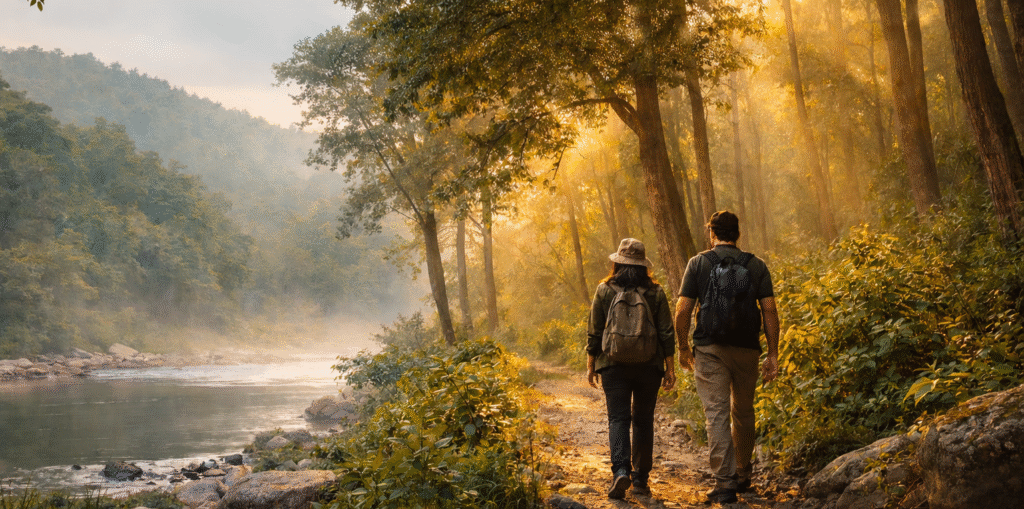
When most travelers think of Jim Corbett National Park, the first image that comes to mind is a jeep bouncing along a dusty forest trail with binoculars raised and cameras ready. But there is another Corbett, quieter, slower, and in many ways more intimate, that only reveals itself to those who explore it on foot.
Trekking in Corbett is not about conquering altitude or covering distance. It is about pausing long enough to notice the flash of a Pied Kingfisher along the Kosi River, the alarm call of a chital that tells you something larger is nearby, or the ancient calm of a sal forest at dawn. For nature lovers, these experiences are priceless.
This guide covers every accessible trekking and nature walk route in and around Jim Corbett National Park with trail details, best seasons, insider tips, and everything you need to plan your trip.
At a Glance: Routes to Jim Corbett
Unlike the high-altitude Himalayan treks that demand fitness and acclimatization, Corbett’s trails are designed for immersion rather than exertion. The terrain is gentle, the biodiversity is extraordinary, and the forest is alive in ways that a jeep safari however thrilling can never fully capture.
Here’s what makes Corbett trekking unique:
- 600+ bird species recorded in the Corbett area, one of India’s richest birdwatching destinations
- Beginner-friendly trails with no technical climbing or high altitude
- Riverside walks along the Kosi River with constant wildlife activity
- Mythological and historical significance woven into the landscape
- Crowd-free and peaceful, most trails see a fraction of the safari traffic
Whether you’re an avid birder, a wildlife photographer, or simply someone who wants to feel the forest breathe around you, Corbett’s trails deliver.
Trekking Routes in Jim Corbett
Trail Name
Difficulty
Distance
Best Season
Sitabani Forest Trail
Easy
3–4 km
Year-round
Corbett Waterfall Trail
Easy
1.5–2 km
Oct–June
Garjia Temple Riverside Walk
Easy
1–2 km
Year-round
Dhikala Buffer Zone Walk
Moderate
2–4 km
Nov–June
Kosi Riverside Nature Walk
Easy
1–3 km
Year-round
1. Sitabani Forest Trail The Hidden Gem
If there is one trail that captures the soul of Corbett beyond its famous tiger reserve, it is the Sitabani Forest Reserve trail. Located on the southeastern edge of Corbett, Sitabani is one of the very few areas in this region where walking trails are officially permitted making it a rare and precious trekking destination.
The Trail
Distance: 3–4 km (loop) Difficulty: Easy Duration: 2–3 hours
The trail winds through dense sal and mixed deciduous forest, passing ancient trees, seasonal streams, and open clearings where deer graze undisturbed. The forest floor is soft underfoot, and the canopy above creates a shifting play of light that makes this trail a photographer’s favourite at any time of day.
What Makes It Special
-
Mythological significance: The area is believed to be the site where Sita rested during her exile, as described in the Ramayana the ancient temple in the reserve adds a quiet spiritual dimension to the walk.
-
Exceptional birdwatching: Brown Fish Owl, Crested Serpent Eagle, White-throated Kingfisher, and numerous warblers are regularly spotted here.
-
Elephant and deer sightings: Wild elephants frequently move through Sitabani your guide will read the signs before you even see them.
-
Minimal tourist footfall: Unlike the main safari zones, Sitabani remains refreshingly uncrowded even in peak season.
Permit & Access Note
A forest entry permit is required for Sitabani, available at the range office near the entrance. Your resort or guide can arrange this in advance. Entry is restricted to guided groups only.
Pro Tip
Visit at dawn for the best birdwatching. The first 45 minutes after sunrise are often the most active period in the forest. Carry a field guide to Himalayan and Indian birds you will use it.
2. Corbett Waterfall Trail Short, Scenic & Perfect for Families
Not every great nature experience needs to be a full-day expedition. The Corbett Waterfall trail is proof that even a 90-minute walk through the jungle can leave you feeling completely renewed.
The Trail
Distance: 1.5–2 km (one way) Difficulty: Easy Duration: 1.5–2 hours return
The path leads through light forest and scrubland before opening out to a beautiful waterfall that drops into a natural pool. The sound of water grows louder as you approach, building anticipation in the best possible way. The pool at the base is a favourite gathering spot for birds and butterflies.
What Makes It Special
-
Ideal for families and first-timers: Flat, clearly marked, and short enough for children and older visitors.
-
Refreshing natural pool: A perfect rest stop though wading in is not recommended to protect the ecosystem.
-
Butterfly and insect diversity: The waterfall clearing supports remarkable butterfly populations common Jezebels, Lime Swallowtails, and Blue Tigers are regularly seen.
Pro Tip
Visit in the morning when the light hits the waterfall at its best angle for photography. Mid-morning on weekdays is the quietest time you may have the trail entirely to yourself.
3. Garjia Temple Riverside Walk Where Nature Meets Spirituality
The walk to and around Garjia Devi Temple is one of the most atmospherically rich experiences in Corbett. The ancient temple perches dramatically on a large rock in the middle of the Kosi River, and the riverside trail leading to it passes through some of the region’s most beautiful riparian landscape.
The Trail
Distance: 1–2 km (one way) Difficulty: Easy Duration: 1–2 hours return
The path follows the Kosi River upstream toward the temple, offering constant views of the river, forested hillsides, and the Himalayan foothills in the distance. River birds are abundant here look for Common Sandpiper, Little Cormorant, Great Thick-knee, and the spectacular Ibisbill if visiting between October and March.
What Makes It Special
-
Sunrise and sunset views: The light on the Kosi and the surrounding hills at these times is extraordinary bring a camera and arrive early.
-
Spiritual atmosphere: The temple draws local pilgrims, creating a fascinating blend of devotion and wildlife that is uniquely Kumaoni.
-
River bird diversity: This stretch of the Kosi is one of the best places in Uttarakhand to observe river and wading birds.
Pro Tip
Combine this walk with an early evening visit to the temple during Aarti the sound of bells and the sight of oil lamps floating on the Kosi at dusk is an experience that stays with you long after you leave Corbett.
4. Dhikala Buffer Zone Walk Deepest Into the Wild
The Dhikala Zone is the jewel of Jim Corbett its vast grasslands (called chaurs), dense riverine forest, and high density of tigers and elephants make it the most sought-after zone in the park. While trekking inside the core zone is prohibited, guided nature walks in the buffer areas surrounding Dhikala offer a genuinely wild experience.
The Experience
Distance: 2–4 km (guided route, variable) Difficulty: Moderate Duration: 2–3 hours
Walking in the Dhikala buffer zone means entering the forest on its own terms without the noise and motion of a jeep. Your footsteps become quieter, your senses sharper. The forest sounds fill the space that engine noise usually occupies. You notice things pugmarks, feathers, the sudden silence that falls before an elephant emerges.
What Makes It Special
-
Raw, unmediated jungle experience: No engine, no exhaust, no crowd just you, your guide, and the forest.
-
Elephant and herbivore sightings: Deer, wild boar, and elephants are commonly seen on buffer zone walks.
-
Forest soundscape: The acoustic experience of the Dhikala forest hornbills, cicadas, distant alarm calls is worth the walk on its own.
Safety Note
This walk is only available with a certified forest guide. Do not attempt unguided walks in or near the Dhikala zone wildlife density here is high, and the rules exist for good reason. Your guide is not a formality; they are the difference between a remarkable experience and a dangerous one
5. Kosi Riverside Nature Walk Right Outside Your Door
Sometimes the best nature experience is the simplest one. The Kosi River flows along the edges of the Corbett buffer zone near Dhikuli and Ramnagar, and the riverside trail here is one of the most accessible and consistently rewarding walks in the entire region.
The Trail
Distance: 1–3 km (flexible) Difficulty: Easy Duration: 1–2 hours
Gravel banks, clear shallows, and boulders draped with river vegetation create a dynamic habitat that attracts wildlife all day, every season. The walk can be as short or as long as you like there are no gates, no permits, and no time pressure. Just the river, the birds, and the quiet.
What Makes It Special
-
Year-round access: Unlike the forest trails that close during monsoon, the riverside walk is accessible throughout the year.
-
Sunrise light: Morning light on the Kosi is simply spectacular golden, low, and perfect for photography.
-
Best birdwatching near any resort: Pied and Common Kingfishers, Ruddy Shelducks, White-capped Water Redstarts, and River Lapwings are regularly seen.
Guests at The Hridayesh Resort, located directly on the Kosi River, can step out their door and onto this trail without any planning making it the perfect way to start or end a day in Corbett.
Best Time for Trekking in Jim Corbett
Corbett’s trekking calendar follows the rhythm of the forest itself each season has its character, its gifts, and its limitations.
Season
Conditions
Best For
Oct – Feb
Cool, dry, excellent visibility
Birdwatching, photography, all trails
Mar – Jun
Warm to hot; animals near water
Wildlife sightings, big cats
Jul – Sep
Lush & green; some trails closed
Jhirna zone, Kosi riverside only
Corbett’s trekking calendar follows the rhythm of the forest itself each season has its character, its gifts, and its limitations.
What to Carry on a Corbett Trek
Corbett’s trails are gentle but the forest is real a little preparation goes a long way.
- Binoculars minimum 8×42, preferably 10×42. You will use them constantly. This is not optional for birdwatchers.
- Camera with zoom lens 200mm minimum; 400mm if you have one. The subjects are often distant and quick.
- Neutral colours forest green, khaki, brown, grey. Avoid white, red, or bright blue you’ll disturb wildlife and stand out to other visitors.
- Water at least 1 litre per person. There are no refreshment stops on forest trails.
- Insect repellent especially important in the monsoon shoulder seasons (September, October).
- Light layers mornings inside the forest are surprisingly cool even in March and April. A light fleece or full-sleeve shirt is recommended.
- Field guide a pocket guide to birds of the Indian subcontinent will dramatically enhance your experience. Collins or Grimmett are excellent choices.
- Silence arguably the most important thing you can bring. The quieter you move, the more you see.
Safety Tips for Trekking in Corbett
Corbett is a live forest with large and potentially dangerous wildlife. These rules are not formalities they exist because people have been hurt by ignoring them.
-
Always go with a certified local guide in any forest or buffer zone area. This is mandatory in most zones and strongly recommended everywhere.
-
Never approach wildlife, no matter how calm it appears. A relaxed-looking elephant can charge with almost no warning.
-
Stay on the trail. Veering off into undergrowth is how encounters with snakes and wild boar happen.
-
No food outside your bag food smells attract animals and encourage dependency on humans, which is dangerous for both.
-
Inform your resort of your planned route and expected return time before heading out on any trail.
-
No plastic inside the forest. Leave only footprints.
Where to Stay: Making the Most of Every Trail
Your choice of accommodation can make a significant difference to your trekking experience in Corbett. Staying close to the forest means you can start trails at first light, the most rewarding time without a long drive.
The Hridayesh Resort sits directly on the banks of the Kosi River, placing guests within walking distance of the riverside trail and within 25 minutes of the Sitabani, Garjia, and Dhikala buffer zone entry points. The resort’s location is not incidental it was chosen precisely because the Kosi corridor is one of the richest wildlife observation zones in the Corbett buffer area.
Guests can enjoy:
-
Step-out-the-door access to the Kosi Riverside Nature Walk
-
Curated guided nature walks arranged by the resort with certified forest guides
-
Early-morning birdwatching from the riverside lawns before breakfast
-
Easy transfers to Sitabani, Garjia Temple, and the Dhikala zone
Frequently Asked Questions
These are the most common questions about trekking in Jim Corbett answered honestly:
1. Is trekking allowed inside Jim Corbett National Park?
Full trekking inside the core zones is restricted to protect wildlife. However, guided nature walks are permitted in buffer zones like Sitabani and along the Kosi riverside. Always go with a certified local guide.
2. What is the best time for trekking in Jim Corbett?
October to February is ideal for birdwatching treks (cool, dry weather). March to June offers better wildlife sightings near water. Monsoon months (July–September) bring lush scenery but limited trail access.
3. Do I need a permit to trek in Jim Corbett?
For the Sitabani Forest Reserve and buffer zones, you need a permit available at the forest range office. Your resort or guide can typically arrange this for you.
4. How difficult are the trekking routes in Jim Corbett?
Most routes in Corbett are beginner-friendly, flat or gently undulating. This is not Himalayan trekking the focus is on immersive observation, not altitude or strenuous climbs.
5. What wildlife can I see on a trek in Jim Corbett?
Expect to spot deer (chital, sambar), langur monkeys, wild elephants, peacocks, river birds like kingfishers and dippers, and if lucky, leopards. Over 600 bird species have been recorded in the Corbett area.
6. Can I trek independently or do I need a guide?
A local guide is strongly recommended (and mandatory in forest buffer zones) for both safety and wildlife identification. Guides know the forest behavior patterns and dramatically improve your sighting chances.
Beyond the Safari Corbett on Foot
There is a version of Jim Corbett National Park that most visitors never experience. It exists in the pre-dawn quiet of a sal forest, in the moment a kingfisher dives and resurfaces in one fluid second, in the distant trumpet of an elephant you hear but never see. It exists on foot.
The trekking routes described in this guide are not just walking paths they are invitations to experience one of India’s most extraordinary natural landscapes at the pace it deserves. Whether you have a full day or just a morning, whether you’re an experienced birder or a complete first-timer, there is a trail in Corbett that will change the way you see this place.
Book your stay, lace up your shoes, and let the forest show you what it has been keeping quiet.
Planning A Trip To Jim Corbett
📞 Call us: +91-88690-73337 / +91-88698-73337
📧 Email: reservations@thehridayeshresorts.com
🌐 Visit: The Hridayesh Resorts
Our team will help you create a personalized itinerary tailored to your travel goals.