
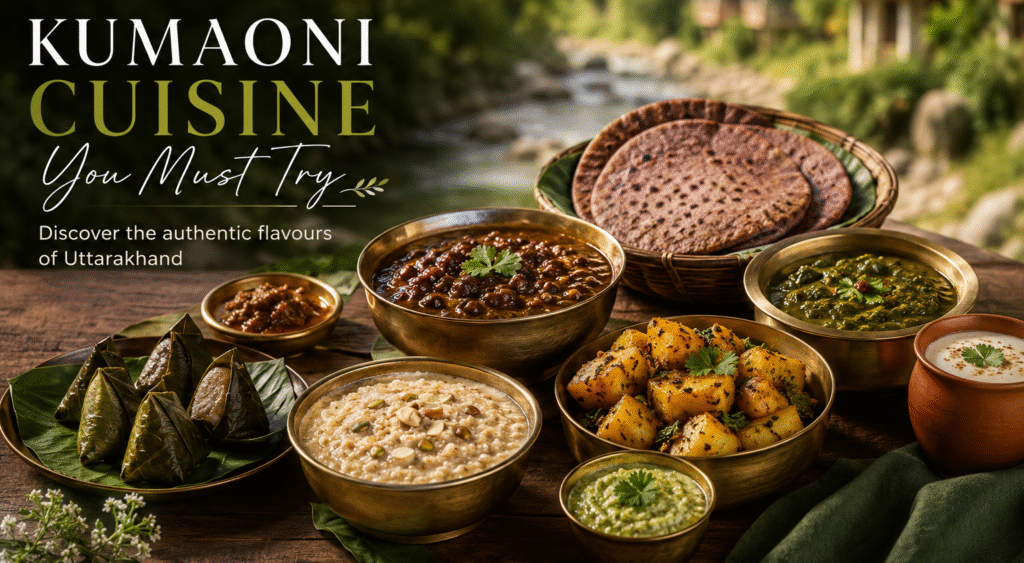
Most people plan a Jim Corbett trip around one thing: the safari. They book the jeep, pack the binoculars, and never think twice about what’s on the plate afterward. Then a bowl of Bhatt Ki Churkani arrives with smoky, slow-cooked black soybeans in a curry that takes hours to get right, and the trip quietly becomes about something else too. At The Hridayesh Resorts, we’ve watched this happen enough times to know: the food isn’t a side note to your Corbett trip. For a lot of guests, it becomes the story they tell first.
Why Kumaoni Food Doesn't Taste Like the Rest of North India
Kumaoni cuisine grew up responding to the mountains, not to trends. No heavy cream, no restaurant-style heat, just what the Himalayan climate would actually grow: indigenous grains like mandua (finger millet), hardy lentils, mountain herbs, and slow-cooked patience. Where a lot of North Indian food chases richness through ghee and cream, Kumaoni cooking gets its depth from time dals and curries simmered for hours until the flavour has nowhere left to hide.
The result is food that’s nutritious, comforting, and once you’ve had it once hard to stop ordering.
1. Bhatt Ki Churkani The Dish Kumaon Is Proud Of
Order Bhatt Ki Churkani expecting a simple bean curry and you’ll be caught off guard. Black soybeans (bhatt) are slow-cooked for hours with local spices until the curry turns creamy and faintly smoky, the kind of dish that tastes like it’s been made the same way for a hundred years, because it has. Ladled over steamed rice or scooped up with mandua roti, it’s usually the first dish locals recommend when they hear you’re new to the region.
Why You’ll Love It
- High in protein
- Rich, smoky flavour that deepens the longer it simmers
- The dish most Kumaonis consider unmistakably their own
- Best on a cool evening, ideally with the Kosi River in view
2. Aloo Ke Gutke The Mountain Snack That Steals the Meal
Order Aloo Ke Gutke expecting a side dish and it steals the plate. Boiled potatoes are pan-tossed in mustard oil with whole spices and red chillies until the edges catch a little char it’s the mustard oil that gives it a taste distinctly of the hills, not of any potato dish you’ve had elsewhere. Pair it with puri, raita, or Bhang Ki Chutney, and you’ll understand why it’s one of the most-ordered dishes in Uttarakhand.
3. Kafuli The Green Curry Locals Grew Up On
Kafuli looks like a simple spinach curry and eats like something far more layered. Fresh spinach and fenugreek leaves are cooked down with local herbs into a thick, creamy green curry, nothing boring about it, and nothing that tastes remotely like a diet dish. Rich in iron, it’s traditionally eaten with steamed rice, mandua roti, and a spoon of homemade ghee stirred through at the table.
4. Chainsoo Kumaon’s Best-Kept Secret
If you only try one dish you’ve never heard of before this trip, make it Chainsoo. Roasted black gram (urad dal) is ground and slow-cooked into a thick curry with a roasted, nutty aroma that no other Indian lentil dish quite has the roasting step is what sets it apart, and it’s the reason locals rank it above dals that get far more attention outside the hills.
5. Gahat (Kulath) Dal The Winter Staple
Gahat, or horse gram, is a Kumaon kitchen staple protein-rich, believed locally to carry medicinal value, and especially popular through winter when the hills turn cold and the body wants something heavier. Paired with steamed rice and a local bread, it’s the kind of dal that explains why mountain food doesn’t need meat to feel substantial.
6. Bhang Ki Chutney The Condiment Worth the Story Alone
Don’t let the name throw you. This is Kumaon’s most famous chutney, made from roasted hemp seeds, green chillies, garlic, lemon juice, and fresh herbs, nutty, tangy, and unlike any condiment you’ll find outside the region. Ask any local what to try once, and this is usually the answer.
7. Mandua Ki Roti The Bread That Predates the Recipe Book
Finger millet (mandua) has been grown in the Himalayan foothills longer than almost any other regional grain, and the roti made from it is a staple for a reason.
Mandua rotis are:
- Rich in fibre
- Naturally gluten-free
- Packed with calcium
- Built to soak up a good curry, not just accompany one
8. Jhangora Ki Kheer Dessert Without the Rice
Every meal deserves a proper ending, and Jhangora Ki Kheer earns its place. Instead of rice, this dessert uses jhangora (barnyard millet), simmered slowly in milk with sugar, cardamom, and dry fruits until it turns silky. It’s lighter than a typical kheer, but no less satisfying the kind of dessert that doesn’t leave you regretting a second bowl.
9. Dubuk Kumaon’s Quiet Comfort Food
Dubuk rarely makes it onto “top dishes” lists, which is exactly why it’s worth seeking out. Locally ground lentils are slow-cooked into a silky, rich gravy unglamorous in name, but the kind of dish that hits hardest after a long day of exploring Corbett’s forests and riverbanks.
10. Singori The Sweet You Can Take Home
Singori is the one dish you shouldn’t leave Uttarakhand without trying and one of the few you actually can take with you. Made from khoya, flavoured with cardamom, and wrapped in a fragrant malu leaf, it has a distinctive aroma the leaf itself is responsible for. It also happens to be one of the best edible souvenirs in the region.
The Ingredients Behind Every Kumaoni Meal
A handful of ingredients show up again and again across Kumaoni cooking and once you can spot them, you’ll start recognising the region’s food anywhere:
- Bhatt (Black Soybean)
- Gahat (Horse Gram)
- Mandua (Finger Millet)
- Jhangora (Barnyard Millet)
- Hemp Seeds
- Mustard Oil
- Fresh Spinach & Fenugreek Leaves
- Local Mountain Herbs
None of these are exotic imports chasing a trend; they’re what the Himalayan foothills have grown for generations, which is exactly why the flavour doesn’t taste replicable anywhere else.
Why Local Cuisine Makes the Trip Worth Remembering
Food tells the story of a place in a way a safari photo can’t. The flavours of Kumaon have survived generations largely unchanged which means eating them isn’t just a meal, it’s the closest a visitor gets to understanding how the region actually lives. A safari shows you Corbett’s wildlife. A plate of Bhatt Ki Churkani shows you its people. A trip that includes both is the one you’ll actually remember in detail a year later.
Where to Try It: Kumaoni Dining at The Hridayesh Resorts
Here’s what we tell every guest before their first safari: leave room. Not for the buffet for the moment later, when a bowl of Bhatt Ki Churkani or a plate of Aloo Ke Gutke shows up and quietly becomes the best part of your day.
At Unwind, our all-day dining restaurant overlooking the pool and surrounding greenery, regional Kumaoni dishes sit alongside a curated menu of Indian, European, Pan-Asian, and Fusion cuisine plated in a refined, pre-plated style with an open show kitchen adding a bit of theatre to every meal. Whether you’re settling in after a morning safari or unwinding with an evening drink at Elixir, every meal here is a chance to taste the Kumaon you came to see.
Set beside the Kosi River, The Hridayesh Resorts is where the safari ends and the real trip the one you didn’t plan for begins.
Tips for Food Lovers Visiting Jim Corbett
Not every monsoon day is a safari day, and that’s not a problem at The Hridayesh Resorts it’s the point of having a resort built around downtime.
- Don’t schedule your one Kumaoni meal for your last night. Try it early enough that you have time to go back for seconds.
- Ask for Bhang Ki Chutney with everything. Locals treat it as a condiment for a reason.
- Save room for dessert. Jhangora Ki Kheer and Singori are worth the extra course.
- Ask the chefs what’s seasonal. The best Kumaoni dishes often aren’t the ones on a printed menu.
Pack light monsoon weather can shift quickly, and you’ll want to move easily between indoor and outdoor plans.
Frequently Asked Questions
1. What is the most famous Kumaoni dish?
Bhatt Ki Churkani is widely regarded as Kumaoni cuisine’s signature dish known for its rich flavour and high nutritional value.
2. Is Kumaoni food spicy?
Not in the way most North Indian food is. Kumaoni cooking leans on aromatic local spices rather than heat, so the result is balanced and flavourful rather than fiery.
3. Is Kumaoni cuisine vegetarian?
Largely, yes lentils, grains, leafy greens, and seasonal vegetables form the core of the cuisine, though non-vegetarian preparations exist too.
4. What dessert should I try in Uttarakhand?
Jhangora Ki Kheer and Singori are both built around ingredients unique to the region, and both hard to find once you leave the hills.
5. Can I try Kumaoni food during my stay at The Hridayesh Resorts?
Yes regional flavours are part of the dining experience at Unwind, alongside a broader Indian and international menu.
Plan Your Stay
📞 Call us: +91-88690-73337 / +91-88698-73337
📧 Email: reservations@thehridayeshresorts.com
🌐 Visit: The Hridayesh Resorts