
The Bijrani zone fills up by 6 AM. The jeeps queue before dawn. And then everyone goes home having seen the same stretch of forest, the same dusty track, the same postcard shot of the Ramganga from the standard viewpoint.
Here’s what they missed: a riverside hamlet where the only sound is moving water. A valley so quiet your phone feels out of place. A birdwatcher’s trail with 150 species and zero jeeps.
Corbett has a side that doesn’t show up in booking portals. This guide covers nine of those places, where they are, what makes each one worth the detour, and how to build them into your trip without sacrificing the safari experience.
Most people leave Corbett having seen the park. A few leave, having felt it, at a riverbank at 6 AM with no one else around, or standing in a village that still smells like woodsmoke and pine.
1. Durga Devi Zone: The Safari You Should Have Booked Instead
Start here, because this is the closest alternative to what you were already going to do, and it’s dramatically better in one specific way: fewer vehicles.
Durga Devi sits in the northeastern corner of the park, marked by rocky terrain, river crossings, and a completely different landscape from the open meadows of Bijrani or Dhikala. It is one of the best birding zones in all of Corbett, with regular sightings of the Great Slaty Woodpecker and Brown Fish Owl along the Mandal River. On a typical morning, you’ll share the trail with two or three other jeeps. On a slow day, none.
What you’ll find here that the main zones don’t offer: the experience of watching wildlife at its own pace, undisturbed by a convoy of vehicles competing for the same sighting.
Best for: Birding, photography, and anyone who wants a safari that doesn’t feel like a queue.
Practical tip: Book the early morning slot. The Mandal River crossings at sunrise are among the most photographed moments in Corbett, and almost no one knows about them.
2. Marchula: A Riverside Morning With No One Watching
Marchula sits on the Ramganga River, about 35 km from Ramnagar, and it rarely appears on safari itineraries because there is nothing to book here. That is precisely the point.
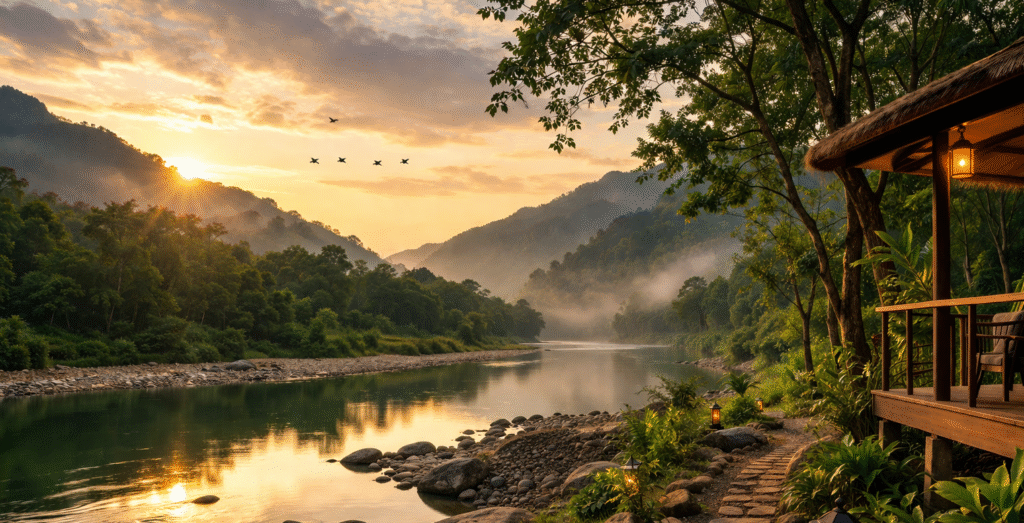
The riverbank here is wide, smooth-stoned, and almost always empty. At sunrise, the water catches the light in a way that makes the Ramganga look more like a painting than a river. There are no designated viewpoints, no ticket counters, no guides with laminates. You arrive, you walk, you sit.
If your travel group includes someone who didn’t ask to be on a wildlife trip, bring them here first. Marchula is the answer to the question: ‘What’s Corbett like if you take away the safari?’
Best for: Slow mornings, landscape photography, and non-wildlife travelers who need convincing that nature is worth the trip.
3. Ramganga River Quiet Stretches: Skip the Crowded Viewpoints
The Ramganga runs through the heart of Corbett, but most visitors only see it from the designated viewpoints, which are crowded, fenced, and designed for group photos, not for actually experiencing the river.
There are quieter stretches accessible from the buffer zone where the river slows down, the banks open up, and the forest comes all the way to the water’s edge. These spots are best reached with a local guide who knows the access points. The reward: crystal-clear water, no crowds, and the kind of stillness that makes you forget there’s a busy park 10 kilometres away.
Best for: Walking, reflection, and anyone who wants to see the river as Corbett’s actual soul, not its backdrop.
4. Kyari Village: The Birdwatcher's Trail Nobody Talks About
Kyari is home to over 150 bird species and sits entirely outside the designated safari zones, which means you can walk the trail at your own pace, stay as long as you want, and bring your own binoculars without booking a jeep.
The village runs on organic farming and has seen almost no commercial tourism. The people here haven’t optimised for visitors yet, which makes interactions feel like the Kumaon hills used to feel before the resorts arrived. On an early morning walk, you’re likely to log 20 or more species before breakfast. The forest is quiet enough that even the birds aren’t skittish.
Best for: Birdwatchers, off-grid travelers, and anyone who wants an authentic Kumaoni village experience.
Best season: October to March for migratory species. Bring a field guide.
5. Tumaria Dam: A Photographer's Secret
Tumaria Dam is one of those places that rewards people who ask What’s past the main road?’ The reservoir spreads out in front of a backdrop of forested hills, and in the early morning, the water’s surface reflects the treeline with near-perfect clarity.
It sees almost no tourist traffic. No chai stalls, no selfie spots, no one else with a camera tripod. Sunrise here produces images that look difficult to take. They’re not, the setting does the work.
Best for: Landscape and reflection photography. Arrive 20 minutes before sunrise.
6. Kotabagh Valley: For the Complete Digital Detox
Kotabagh is one of the least-visited regions near Corbett. No commercial infrastructure, no tour operators, no organised experiences. What it does have: open forest, streams that run clear through October, and a silence that most people haven’t heard since childhood.
The valley is best experienced on foot with a local guide. The trails aren’t marked, which is part of the point. You’re not following a path designed for tourists; you’re walking through a landscape that doesn’t know you’re there yet.
Best for: Anyone who needs to genuinely disconnect. One full day minimum.
7. Mohan Range: Where the Jungle Gets Dense
Mohan Range sits on the northern buffer of Corbett and sees fewer than a dozen visitor vehicles on a typical day. The forest here is denser, darker, and different in character from the open meadows of the main zones. This is leopard country rather than tiger country, which means quieter behaviour, different movement patterns, and sightings that reward patience over luck.
The sal trees in the golden light between 6:30 and 7:30 AM are worth the early drive alone.
Best for: Wildlife photography, repeat Corbett visitors who want something they haven’t seen before.
8. Pangot: The Misty Hill Escape One Drive Away
A short drive from the Corbett buffer zone, Pangot is a birding village in the Nainital hills with over 250 recorded species and almost none of the crowds that have taken over Nainital itself. The habitat here is Himalayan oak and rhododendron forests, mist in the mornings, and mountain views on clear days.
It pairs naturally with a Corbett itinerary as a third-day extension, giving you a change of elevation, a change of climate, and a completely different set of birds. It is the rare destination that does not disappoint when you arrive, having read about it.
Best for: Adding a hill-station day to a jungle itinerary. Good for families with mixed interests.
9. Bhimtal & Naukuchiatal: When You Want a Lake Without the Crowd
Skip Nainital. The lakes there are beautiful and completely overrun. Bhimtal and Naukuchiatal, 20 to 30 minutes further, offer the same Kumaoni lake landscape at a fraction of the footfall.
Bhimtal has a small island in its centre with a functioning aquarium. Naukuchiatal, the ‘lake of nine corners’ is larger, quieter, and ideal for kayaking or simply sitting on the bank with nothing to do. Both work well as a half-day addition before or after your Corbett stay.
Best for: Families, couples, and anyone who wants a relaxed lake afternoon without navigating tourist traffic.
How to Explore These Places Without Wasting a Day
A few practical principles for getting this right:
- Start before 6:30 AM for any location involving water or wildlife. The light is better, the crowds are nonexistent, and the experience is fundamentally different from arriving at 9.
- Hire a local guide for Kyari, Kotabagh, and Mohan Range. These are not marked trail destinations. A guide reduces wasted time to near zero.
- Cluster locations by direction. Durga Devi and Marchula work well together. Pangot, Bhimtal, and Naukuchiatal can fill a single day.
- Keep one day flexible. The best moments near Corbett tend to happen when you didn’t plan for them.
Plan It From The Hridayesh Resort
The Hridayesh Resort sits on the Kosi River, positioned to reach most of the locations in this guide within 30 to 60 minutes.
Our team can help you build a day-by-day itinerary that combines the main safari zones with the places most guests never find. Whether you want a morning at Tumaria Dam before the light changes, a guided walk through Kyari, or a quiet afternoon at the Ramganga, we can map it around your travel dates and group.
These places are quiet now. They won’t be forever. The window to experience Corbett without the crowd is still open, just barely.
Book your stay at Hridayesh Resorts
📞 Call us: +91-88690-73337 / +91-88698-73337
📧 Email: reservations@thehridayeshresorts.com
🌐 Visit: The Hridayesh Resorts
Let us put together the itinerary most people drive past
Frequently Asked Questions
What are the best offbeat places near Jim Corbett?
Ans. Durga Devi Zone, Marchula, Kyari Village, Tumaria Dam, Kotabagh Valley, Mohan Range, Pangot, Bhimtal, and Naukuchiatal are among the best lesser-known destinations near Corbett.
Are there places near Corbett apart from safari?
Yes, rivers, dams, birding villages, hill lakes, and buffer-zone forest trails offer completely different and often more memorable experiences than the safari zones.
Which is the least crowded area near Jim Corbett?
Kotabagh Valley and Kyari Village see the fewest visitors. Durga Devi Zone is the least crowded of the official safari zones.